If migraines regularly steal your days, you'll try almost anything for gentle, natural relief. Yoga for migraine is one of the most soothing options — slow, calming poses and breathing can ease tension, improve blood flow and help prevent attacks before they start. This guide shares 8 effective yoga poses for migraine and headache relief, a short routine, and the safety points to keep in mind.
Can Yoga Help With Migraines?
For many people, yes — as a gentle, complementary practice. Migraines and tension headaches are often triggered or worsened by stress, muscle tension in the neck and shoulders, poor sleep and shallow breathing. Yoga addresses all of these. It won't replace your migraine medication or a neurologist's care, but a calm, regular practice may reduce how often and how severely attacks strike.
How Yoga Eases and Prevents Headaches
Yoga helps with migraines in several ways:
- Releases neck and shoulder tension, a very common headache trigger.
- Calms the nervous system and lowers stress, a major migraine driver.
- Improves blood flow and circulation to the head and brain.
- Encourages deep, steady breathing that relaxes the whole body.
Since tension and stress are key, see also our guides to yoga for neck and shoulder pain and yoga for anxiety and stress.
Calming Poses for Migraine Relief
These gentle, grounding poses soothe the nervous system:
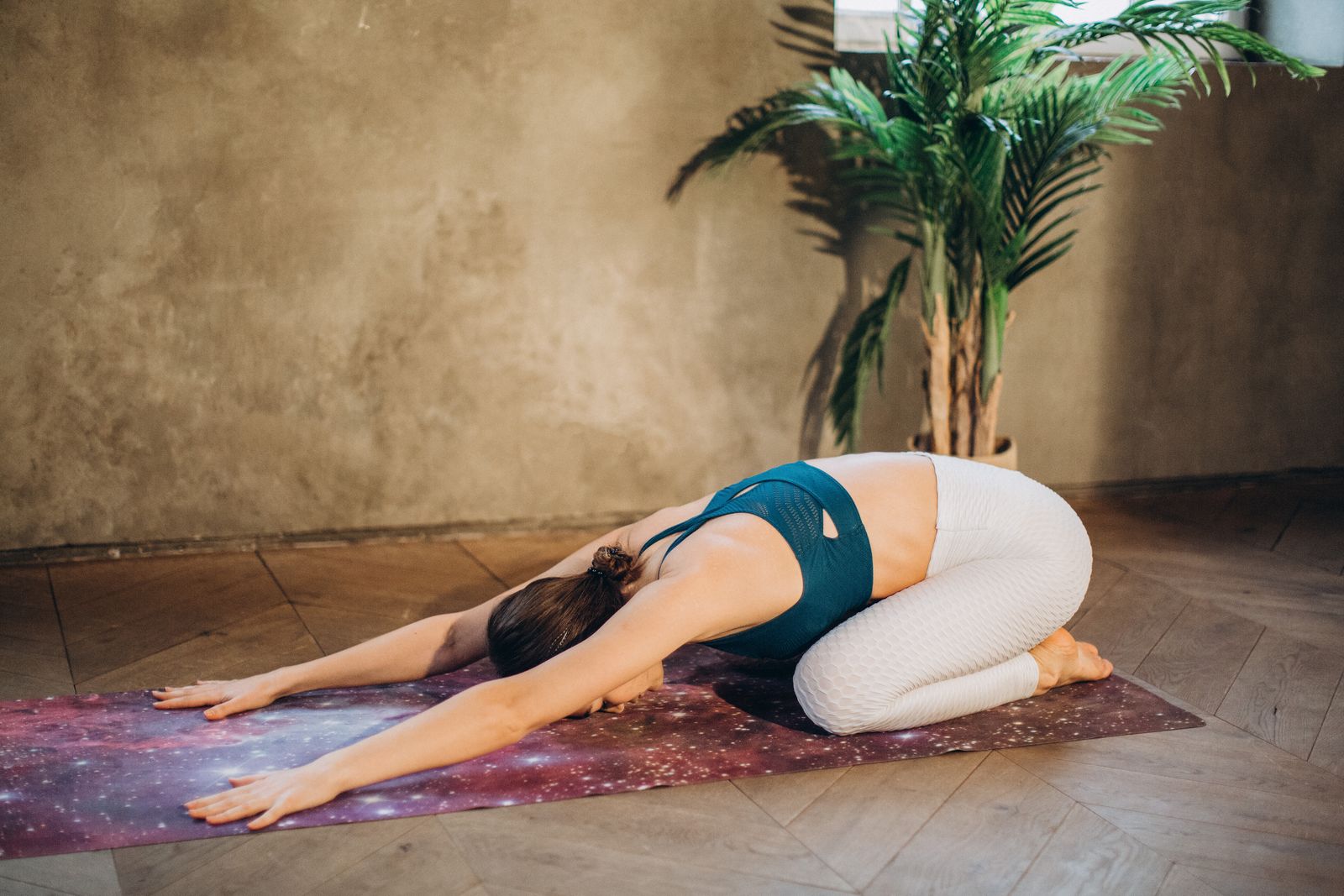
- Child's Pose (Balasana) — a deeply calming forward fold that quiets the mind.
- Forward Fold (Uttanasana) — relaxes the neck and improves blood flow to the head.
- Legs-Up-the-Wall (Viparita Karani) — a restful inversion that eases pressure and calms.
- Corpse Pose (Savasana) — total relaxation, ideal during or after an attack.
Poses That Release Neck and Shoulder Tension
Because tight shoulders and necks trigger headaches, add these:
- Cat-Cow (Marjaryasana-Bitilasana) — gently mobilises the neck and spine.
- Seated Neck Stretches — slow, careful stretches to release built-up tension.
- Bridge Pose (Setu Bandhasana) — opens the chest and eases upper-back tightness.
- Reclining Twist (Supta Matsyendrasana) — releases the spine and shoulders.
Breathing Techniques to Stop a Headache
Breathwork can calm an oncoming attack. Bhramari (humming bee breath) is especially soothing for headaches — the gentle vibration and long exhale relax the head and nervous system. Nadi Shodhana (alternate nostril breathing) balances and steadies the mind. Practising slow, deep breathing at the first sign of tension may stop a headache escalating. Explore more in our guide to pranayama.
A Simple Migraine-Relief Routine
| Step | Practice | Time |
|---|---|---|
| Release tension | Cat-Cow & neck stretches | 4 min |
| Calm forward folds | Child's Pose & Forward Fold | 4 min |
| Restful inversion | Legs-Up-the-Wall | 5 min |
| Breathe | Bhramari & Nadi Shodhana | 5 min |
| Rest | Savasana | 5 min |
What to Avoid During a Migraine
When a migraine is active, less is more. Avoid intense, fast or heated practice, strong inversions like headstand and shoulderstand, vigorous breathing like Kapalabhati, and anything that strains or bright, busy environments. Instead, favour gentle, restful poses in a quiet, dim room — child's pose, legs-up-the-wall, Savasana and slow breathing. Listen to your body and stop if a pose worsens the pain.
Safety First and When to See a Doctor
Yoga is a supportive practice, not a replacement for medical care. Keep taking any prescribed migraine medication and follow your doctor's advice. Importantly, see a doctor promptly if you have a sudden severe "worst-ever" headache, headaches with vision loss, weakness, confusion or fever, or a new pattern of headaches — these need medical attention, not yoga. For frequent or severe migraines, consult a neurologist and use yoga as a gentle complement.
How Often Should You Practise?
For prevention, a gentle 20–30 minute practice, 4–5 times a week helps keep stress and tension low. During an attack, do only what feels soothing — even five minutes of legs-up-the-wall and slow breathing can take the edge off. Consistency between attacks is what builds resilience, so keep your practice calm, regular and kind. Good sleep helps too; see our guide to yoga for better sleep.
Common Migraine Triggers Yoga Can Help With
Understanding your triggers makes yoga more effective. Many migraines are set off by stress, poor sleep, neck and shoulder tension, dehydration, skipped meals and screen strain. Yoga directly eases several of these — it lowers stress, releases physical tension and improves sleep — while the mindful awareness it builds helps you notice and avoid your personal triggers earlier. Keeping a simple headache diary alongside your practice can reveal patterns, so you can use the right calming poses before a full attack takes hold.
Yoga for Tension Headaches vs Migraines
The two overlap but differ. Tension headaches — a dull, tight band around the head — respond especially well to neck-and-shoulder release and gentle forward folds. Migraines are more complex, often with throbbing pain, nausea and light sensitivity, and are best managed by prevention: regular calming practice between attacks, and rest during one. For both, the gentle, stress-lowering approach in this guide is the safest and most soothing path.
Making Yoga a Preventive Habit
Yoga helps migraines most when it's consistent, not just reached for mid-attack. To build the habit:
- Practise gently most days, even for 15–20 minutes.
- Keep sessions calm and slow rather than intense.
- Add daily breathing, which you can also use at the first sign of tension.
- Protect your sleep and hydration, which hugely affect migraines.
Desk Yoga to Prevent Headaches at Work
Hours at a screen are a major headache trigger, so a few desk-friendly moves can prevent tension building. Every hour, roll your shoulders, gently drop each ear toward your shoulder for a slow neck stretch, and sit tall to open your chest. A seated forward fold over your desk, a gentle seated twist, and a minute of slow breathing all release the upper-body tension that leads to headaches. Pair these micro-breaks with looking away from your screen regularly and staying hydrated, and you'll head off many tension headaches before they start.
Bottom line: Yoga for migraine — combining calming forward folds, neck-and-shoulder release, restful inversions and soothing breathing — may help relieve and prevent headaches, but severe or sudden headaches always need a doctor, and yoga works best alongside medical care.
Frequently Asked Questions
Can yoga help with migraines?
For many people, yes, as a gentle complementary practice. By releasing neck and shoulder tension, calming the nervous system and improving breathing, yoga may reduce how often and how severely migraines strike - but it doesn't replace medical care.
Which yoga pose is best for a headache?
Calming, grounding poses work best - child's pose, forward fold, legs-up-the-wall and Savasana soothe the nervous system and ease tension. Humming bee breath (Bhramari) is also very effective for headaches.
Can I do yoga during a migraine attack?
Only very gently. Avoid intense or heated practice and strong inversions. Favour restful poses like legs-up-the-wall and Savasana with slow breathing in a quiet, dim room, and stop if anything worsens the pain.
Does yoga prevent migraines?
It may help prevent them by lowering stress, easing muscle tension and improving sleep - all common triggers. A gentle, consistent practice between attacks tends to build the most resilience over time.
What breathing helps a migraine?
Humming bee breath (Bhramari) is especially soothing, as the gentle vibration and long exhale relax the head. Alternate nostril breathing (Nadi Shodhana) also calms and steadies the nervous system.
When should I see a doctor for headaches?
See a doctor promptly for a sudden severe headache, or headaches with vision loss, weakness, confusion or fever, or a new pattern. These need medical attention. Use yoga only as a gentle complement to care.