That deep ache in your lower back that shoots down through your buttock and leg — sometimes with tingling or numbness — is the unmistakable signature of sciatica. It can make sitting, standing, even sleeping miserable. The good news: gentle yoga for sciatica is one of the most effective, drug-free ways to calm the irritated nerve and stop the pain returning.
Why Sciatica Happens
Sciatica is pain along the sciatic nerve, the longest nerve in your body, usually caused when it gets compressed — by a tight piriformis muscle deep in the buttock, hours of sitting, or a disc pressing on the nerve root. The muscles around it clench protectively, which only squeezes the nerve more. This is exactly where yoga for sciatica helps: it gently lengthens those tight muscles and takes the pressure off, instead of masking the pain.
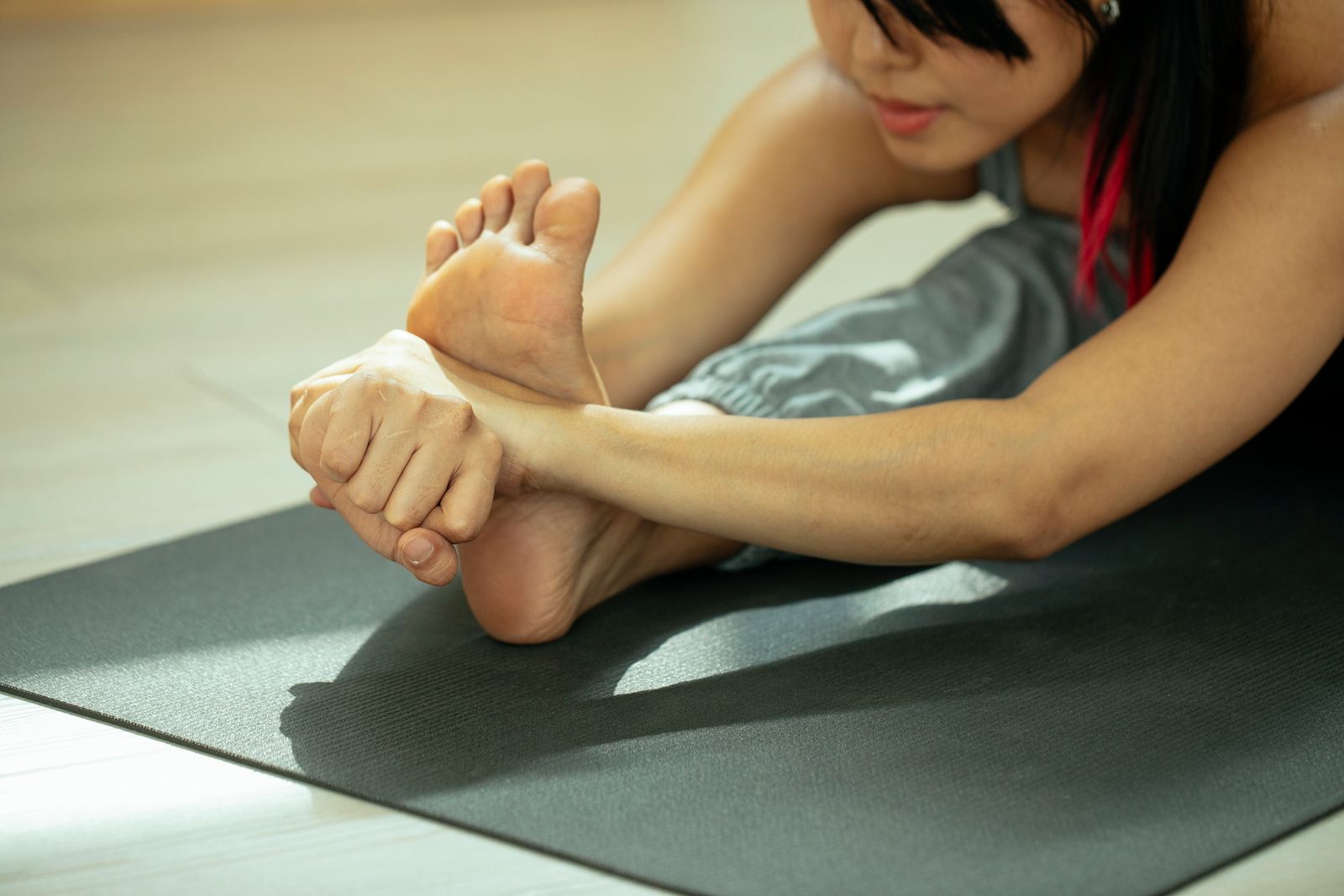
7 Gentle Yoga Poses for Sciatica
Move slowly, breathe deeply, and never push into sharp or shooting pain.
- Reclined Pigeon (Figure-4) — releases the piriformis that traps the nerve.
- Knees-to-Chest — gently decompresses the lower back.
- Reclined Spinal Twist — eases tension along the spine.
- Cat-Cow — mobilises the lower back safely.
- Child's Pose — creates gentle space between the vertebrae.
- Sphinx Pose — a mild backbend that can help disc-related sciatica.
- Standing Forward Fold (soft knees) — lengthens the whole back line.
How to Practise Safely
Little and often wins. Five to ten minutes of gentle yoga for sciatica daily, moving within a pain-free range, calms the nerve far better than one long, forceful session. Avoid deep seated forward folds and intense hamstring stretches during an acute flare. Because sciatica often overlaps with lower-back tightness, our guides to yoga for back pain and tight hips are the perfect companions.
When to See a Doctor
Yoga for sciatica is excellent for everyday nerve pain. But if you have severe pain, weakness in the leg, or any loss of bladder or bowel control, see a doctor immediately - yoga supports recovery, it doesn't replace medical care.
Frequently Asked Questions
Is yoga good for sciatica?
Yes. Yoga for sciatica gently stretches the tight muscles - especially the piriformis - that compress the sciatic nerve, easing the shooting pain and helping prevent it returning, all without medication.
Which yoga poses are best for sciatica?
Gentle poses work best: Reclined Pigeon (Figure-4), Knees-to-Chest, Reclined Twist, Cat-Cow, Child's Pose and Sphinx. Move slowly and avoid any pose that causes sharp or shooting pain.
What yoga should I avoid with sciatica?
During a flare, avoid deep seated forward folds, intense hamstring stretches and strong twists, which can aggravate the nerve. Stick to gentle, supported movement within a pain-free range.
How often should I do yoga for sciatica?
A short daily practice of five to ten minutes is ideal. Gentle, consistent movement relieves sciatica far more effectively than an occasional long or intense session.
How long until yoga helps sciatica?
Many people feel some relief within a few sessions, with steadier improvement over two to six weeks of regular gentle practice. Persistent or severe sciatica should be checked by a doctor.