Torn between studying from your living room and flying to a studio? The online vs in-person yoga teacher training decision affects your budget, your experience and how confident you'll feel the first time you lead a class. Both paths can earn you the same certification, but they deliver very different journeys. This honest comparison breaks down cost, flexibility, hands-on learning, community and results — so you can choose the format that truly fits your life and goals.
Online Yoga Teacher Training: The Pros
Online yoga teacher training has boomed, and for good reason. It's flexible and affordable — you learn from home, on your own schedule, often for a lower fee. There's no travel, no time off work, and you can revisit recorded lessons as often as you like. For self-disciplined people who can't take a month away, a good virtual course is a genuine, accessible route into teaching.
Online Training: The Cons
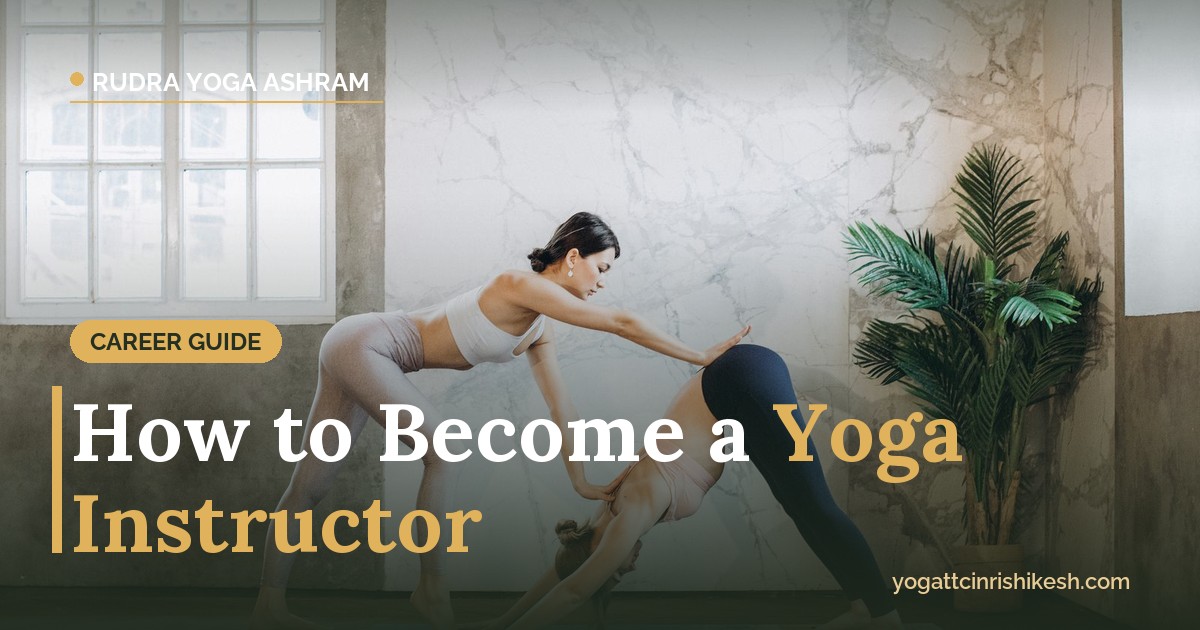
The trade-offs are real, though. Online, you miss hands-on adjustments, real-time feedback on your own alignment, and the immersion that builds teaching confidence. Learning to physically guide a student into a safe posture — where to place your hands, how much pressure to use, how to spot a misalignment across a busy room — is genuinely hard to master through a screen. It also takes serious self-motivation to complete a course alone at home, working around the distractions of daily life. And practising teaching to a webcam simply isn't the same as feeling the energy of a real room and adjusting your cues to living, breathing students in front of you. For some, that gap shows the first time they teach in person.
In-Person Training: The Pros
In-person training — especially a residential course at an ashram — gives you hands-on corrections, live teaching practice, instant feedback, community and total immersion. You eat, breathe and live yoga for a month, surrounded by teachers and fellow students who quickly become friends. Teachers can watch your alignment and gently correct it in real time, you practise teaching to actual classmates rather than a camera, and the philosophy sinks in because you're living it, not squeezing lessons between work emails. That environment builds skill and confidence remarkably fast, and it's why residential yoga teacher training in places like Rishikesh — the birthplace of yoga — remains the gold standard for people who want to genuinely feel ready to lead a room.

In-Person Training: The Cons
It's not perfect for everyone. In-person training costs more upfront, requires time away from work and family, and means travel. For people with tight budgets, young children or jobs they can't leave, taking a month off simply isn't realistic. That's the honest trade-off — deeper experience in exchange for more time and money.
Side-by-Side Comparison
| Factor | Online | In-Person |
|---|---|---|
| Cost | Lower | Higher (often all-inclusive) |
| Flexibility | High — your schedule | Fixed dates |
| Hands-on adjustments | No | Yes |
| Immersion & community | Low | High |
| Live teaching practice | Limited | Extensive |
| Confidence to teach | Moderate | High |
Do Both Get You Certified?
Yes — and this surprises people. As long as the course is Yoga Alliance registered, both online and in-person 200-hour trainings lead to the same RYT 200 credential, recognised worldwide. The certificate is identical; the difference is the depth of the experience behind it. Always check the school's Yoga Alliance registration before enrolling, whichever format you choose.
Which Should You Choose?
It comes down to your priorities:
- Choose online if budget and flexibility are your top concerns, you're self-motivated, and you can't travel or take time off.
- Choose in-person if you want hands-on learning, community, real teaching practice and the confidence that comes from full immersion.
If you possibly can, train in person somewhere immersive — the month changes you as much as it certifies you. Explore our 200-hour residential course, check the honest cost of training, and see how long it takes to qualify.
Which Type of Student Suits Online Training?
Online yoga teacher training genuinely shines for certain people. It's the right fit if you have a demanding job you can't leave for a month, family responsibilities that keep you at home, or a tight budget that rules out travel and residential fees. It also suits disciplined self-starters — people who can hold themselves to a study schedule without a teacher in the room. If you already have a strong personal practice and mainly want the theory, methodology and certification to formalise your teaching, a quality online course can serve you well. The key word is discipline: online only works if you'll actually do the hours.
Which Type of Student Suits In-Person Training?
In-person, residential training is ideal if you learn best by doing, want hands-on feedback, and value community and immersion. It's perfect for people who can carve out three to four weeks and want to use that time as a genuine reset — a chance to step out of daily life and focus entirely on yoga. It also suits nervous or first-time teachers, because nothing builds confidence like practising in front of real classmates and being coached in the moment. If you want to come home not just certified but truly ready to teach, in-person is hard to beat.
What to Check Before You Enrol — Either Way
Whichever format you choose, protect your investment by checking a few things first:
- Yoga Alliance registration — confirm the school is an RYS so your RYT 200 is recognised.
- The teachers — who leads the course, and how experienced are they?
- Teaching practice — how many hours will you actually spend leading classes?
- Group size — smaller cohorts mean more personal attention, online or in person.
- Reviews — read honest graduate feedback, not just the sales page.
Cost Difference: Online vs In-Person
Money is often the deciding factor, so it's worth understanding the real picture. Online courses usually have the lowest sticker price because there's no accommodation, food or venue to pay for. In-person residential courses cost more upfront — but in a place like Rishikesh the fee is typically all-inclusive, covering tuition, accommodation and daily meals for the whole month. Once you factor in that you're not paying rent, groceries or commuting during those weeks, the true gap narrows a lot. So compare the full cost of living, not just the course fee, and remember that India offers residential training at a fraction of Western prices for the very same certification.
Our Honest Verdict
Both formats are valid and both earn you the same certification — so there's no wrong choice, only the right choice for your circumstances. But if time and budget allow, our honest recommendation is in-person, residential training. The hands-on learning, the community, the real teaching practice and the sheer immersion produce more confident, capable teachers, and the experience itself is unforgettable. Online is a superb, accessible backup when life won't let you travel; in-person is the fullest way to become a teacher.
Bottom line: Both online and in-person yoga teacher training lead to the same RYT 200 certificate — pick online for flexibility and lower cost, or in-person for hands-on learning, immersion and the confidence to actually teach.
Frequently Asked Questions
Is online yoga teacher training worth it?
Yes, if it's Yoga Alliance registered and you're self-disciplined. Online training is flexible and affordable and earns the same RYT 200, but you miss the hands-on adjustments and immersion of in-person study.
Is online or in-person yoga teacher training better?
In-person training builds more confidence through hands-on corrections, live teaching and immersion. Online is better for budget and flexibility. Both lead to the same certification, so it depends on your goals.
Do online yoga courses give real certification?
Yes. If the school is Yoga Alliance registered, an online 200-hour course leads to the same RYT 200 credential as an in-person one, recognised worldwide.
Can you learn to adjust students online?
Only in theory. Online courses teach the principles, but hands-on adjustment skills are best learned in person, where teachers guide your touch and alignment in real time.
Is in-person yoga teacher training worth the extra cost?
For most people, yes. The immersion, community, live teaching practice and hands-on feedback produce far more confident teachers, which is why residential training remains the gold standard.
Can I mix online and in-person training?
Some schools offer hybrid courses, with theory online and practical intensives in person. This can balance flexibility with hands-on learning, but check that the full programme is Yoga Alliance registered.