Table of Contents
- Why Rishikesh Is the Best Place for Yoga Teacher Training
- What Makes a Yoga School the Best in Rishikesh
- Why Yoga Alliance Certification Matters
- Curriculum: Multi-Style vs Single-Style Training
- Why Small Batch Sizes Produce Better Teachers
- Accommodation, Food, and Included Amenities
- Pricing: What to Expect and What to Avoid
- Choosing Between 100, 200, 300, and 500 Hour Programs
- Red Flags to Watch Out For
- Your Checklist Before Enrolling
- Frequently Asked Questions
Rishikesh has hundreds of yoga schools offering teacher training programs, and choosing the best yoga school in Rishikesh can feel overwhelming. Some schools have beautiful websites but deliver rushed training with unqualified instructors. Others offer genuine, life-changing programs but are difficult to find among the noise. Making the wrong choice means wasting your time, money, and the opportunity to receive a proper foundation in yoga.
This guide will help you evaluate yoga schools in Rishikesh objectively. Instead of giving you a generic list, we will walk you through the exact criteria that separate excellent schools from average ones, so you can make an informed decision based on what actually matters for your yoga teaching career.
Why Rishikesh Is the Best Place for Yoga Teacher Training
Before comparing schools, it helps to understand why Rishikesh attracts more yoga teacher training students than any other city in the world. The answer goes beyond the title of Yoga Capital of the World.
Yoga was born here. The sages who codified the yoga traditions, from Patanjali's Yoga Sutras to the Hatha Yoga Pradipika, lived and taught in the Himalayan foothills that surround Rishikesh. When you train here, you are practising in the same landscape where yoga evolved over thousands of years. That context cannot be replicated in a rented studio in Bali or Barcelona.
The teacher pool is unmatched. Because Rishikesh has been the centre of yogic learning for centuries, it attracts India's most experienced and traditionally trained yoga teachers. Many instructors here hold advanced degrees in Yogic Science from Indian universities, have studied under lineage masters, and have been teaching for 15 to 20 years or more. This depth of expertise is difficult to find anywhere else at the same price point.
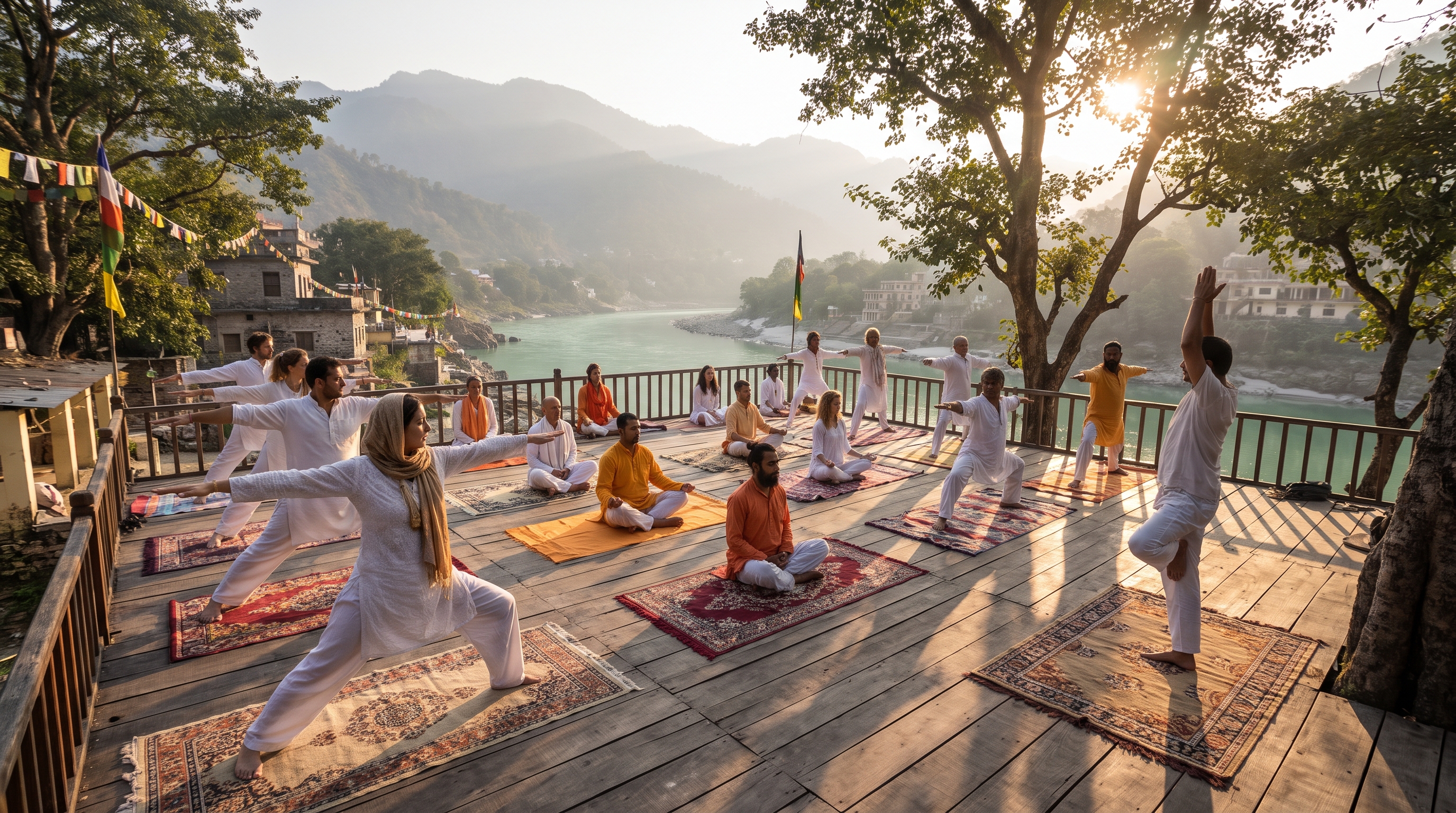
Immersive environment. Training in Rishikesh means waking up to the sound of the Ganges, practising asanas with the Himalayas as your backdrop, and walking past temples and ashrams on your way to class. This immersion accelerates your learning because yoga is not just something you study for a few hours — it becomes the fabric of your entire day.
Affordability without compromise. A 200-hour yoga teacher training in Rishikesh costs a fraction of what comparable programs charge in Western countries. A program that would cost $3,000 to $5,000 USD in the United States or Europe can be completed in Rishikesh for $500 to $1,500 USD, including accommodation and meals, without any reduction in quality.
What Makes a Yoga School the Best in Rishikesh
The phrase best yoga school in Rishikesh for TTC means different things to different people, but certain quality markers are non-negotiable regardless of your personal preferences. Here are the criteria that matter most.
Qualified and Experienced Teachers
The teachers are the most important factor in any yoga teacher training program. Look for instructors who have formal education in yoga (such as a Master's degree in Yogic Science or equivalent), at least 10 years of teaching experience, and training under recognised lineage masters. A school with one or two celebrity teachers on the website but a rotating roster of junior instructors for actual classes is a warning sign. The teachers listed on the website should be the ones who actually teach your batch.
Structured and Comprehensive Curriculum
A strong curriculum covers far more than asana practice. According to Yoga Alliance standards, a certified program must include technique and practice, teaching methodology, anatomy and physiology, yoga philosophy, ethics, and practicum (practice teaching). The best yoga schools in Rishikesh go beyond these minimums by including pranayama, meditation, mantra chanting, yoga nidra, Ayurveda basics, and alignment workshops as core components rather than optional extras.
Genuine Student Reviews
Google reviews and platform reviews on sites like BookRetreats, TripAdvisor, and BookYogaTeacherTraining provide honest feedback from past students. Look for reviews that mention specific details about the teaching quality, daily schedule, food, accommodation, and overall experience. Generic five-star reviews with one-line comments like "amazing experience" are less reliable than detailed reviews that describe what the student actually learned.
Transparent Pricing
The best schools are upfront about their fees and what is included. Hidden costs for materials, certification fees, excursions, or "premium" classes are a red flag. A good school includes accommodation, three meals a day, all course materials, and the certification fee in one transparent price. At Rudra Yoga Ashram, for example, we charge the same fees for Indian and international students, with no hidden extras or last-minute surcharges.
Why Yoga Alliance Certification Matters
Yoga Alliance is the largest international registry for yoga teachers and yoga schools. When a school is registered as an RYS (Registered Yoga School) with Yoga Alliance, it means the school's curriculum, teaching hours, and instructor qualifications have been reviewed and approved against a standardised framework.
Here is why this matters for you as a student:
Global recognition. A Yoga Alliance RYT (Registered Yoga Teacher) credential is recognised by studios, gyms, retreat centres, and employers in over 100 countries. Without this certification, many studios will not hire you, and many insurance providers will not cover you as a yoga teacher.
Curriculum standards. Yoga Alliance sets minimum requirements for contact hours in each subject area. This ensures that your training covers asana, anatomy, philosophy, teaching methodology, and practicum in adequate depth rather than spending 80 percent of the time on asana practice alone.
Career progression. Your 200-hour RYT certification is the foundation. You can later complete a 300-hour advanced training to earn your RYT-500, which opens doors to higher-paying teaching positions, specialised workshops, and international opportunities. This progression only works if your initial certification comes from a Yoga Alliance registered school.
RYS 200 vs RYS 300 vs RYS 500
RYS 200 means the school can certify students at the 200-hour level. RYS 300 means it can offer a 300-hour advanced training. RYS 500 means it can certify at the 500-hour level. The best schools hold all three registrations, allowing you to complete your entire certification journey with the same trusted institution. Rudra Yoga Ashram is registered as RYS 200, RYS 300, and RYS 500 with Yoga Alliance USA.
Curriculum: Multi-Style vs Single-Style Training
One of the most important distinctions between yoga schools in Rishikesh is whether they teach a single style of yoga or a multi-style curriculum.
Single-style schools focus exclusively on one tradition such as Ashtanga, Iyengar, or Sivananda yoga. These programs offer deep mastery of one system but can leave gaps in your teaching ability. If you graduate from a pure Ashtanga school, you may struggle to teach a Vinyasa flow class or guide students through restorative poses.
Multi-style schools teach you multiple traditions in a structured way, typically including Hatha, Ashtanga, Vinyasa, and alignment-based yoga. This approach gives you a broader foundation and makes you a more versatile teacher who can adapt to different student needs, studio requirements, and class formats. In the real world of yoga teaching, versatility is an enormous advantage.
At Rudra Yoga Ashram, we follow a multi-style curriculum that covers Hatha yoga, Ashtanga yoga, Vinyasa flow, Iyengar-influenced alignment, pranayama, meditation, yoga philosophy, anatomy, and teaching methodology. This means our graduates can confidently teach multiple class formats from their very first day as a certified instructor.
Why Small Batch Sizes Produce Better Teachers
Class size has a direct impact on the quality of your training. Schools that pack 40 to 60 students into a single batch cannot provide individual attention, personalised alignment corrections, or meaningful feedback on your practice teaching sessions.
In a small batch of 15 to 25 students, the teacher can observe your alignment in every pose, correct your mistakes before they become habits, and give you detailed feedback during practicum sessions. You also get more opportunities to practice teaching in front of the group, which is critical for building confidence.
When evaluating the top yoga schools in Rishikesh, ask specifically about their batch size. If the school cannot give you a clear number, or if the number is above 30, consider that a disadvantage. Quality yoga teacher training is not a lecture — it is hands-on, personal, and interactive, and that requires a manageable group size.
Accommodation, Food, and Included Amenities
Your training program is intense. You will be practising yoga, studying philosophy, learning anatomy, and practice-teaching for 8 to 10 hours a day. Your accommodation and meals need to support that effort, not undermine it.
Accommodation Options
Most yoga schools in Rishikesh offer three types of accommodation:
| Room Type | Description | Best For |
|---|---|---|
| Dormitory | Shared room with 4-6 students, common bathroom | Budget-conscious students who enjoy a social environment |
| Shared Room | Twin-sharing room with attached bathroom | Students who want privacy and comfort at a moderate price |
| Private Room | Single-occupancy room with attached bathroom | Students who need quiet time for study and rest |
Food and Nutrition
Ashrams in Rishikesh serve sattvic vegetarian food, which is the traditional yogic diet. This means fresh, plant-based meals cooked with minimal spices and no onion, garlic, or processed ingredients. Three meals a day should be included in your program fee. Good schools also provide herbal tea, filtered water, and fresh fruits throughout the day. If you have dietary restrictions or allergies, confirm with the school before enrolling that they can accommodate your needs.
Amenities to Expect
A well-run yoga school should provide free Wi-Fi, hot water, clean linens, yoga mats and props, course materials (either printed or digital), a dedicated yoga hall, and a quiet study area. Air conditioning is a bonus during summer months but not standard in all schools. Laundry service is usually available for a small fee.
Pricing: What to Expect and What to Avoid
The cost of yoga teacher training in Rishikesh varies significantly depending on the school, accommodation type, and program duration. Here is a realistic breakdown of what you should expect to pay in 2026:
| Program | Duration | Typical Price Range (INR) |
|---|---|---|
| 100-Hour YTT | 14 days | ₹10,000 - ₹25,000 |
| 200-Hour YTT | 24-28 days | ₹18,000 - ₹50,000 |
| 300-Hour YTT | 28-30 days | ₹24,000 - ₹55,000 |
| 500-Hour YTT | 55-60 days | ₹43,000 - ₹95,000 |
Be cautious of schools that charge significantly below these ranges. Extremely low prices often mean overcrowded batches, underqualified teachers, poor accommodation, or hidden fees that appear after you arrive. Equally, the most expensive school is not automatically the best. Price should reflect the quality of instruction, accommodation, and overall experience.
One pricing practice to look for is equal pricing for Indian and international students. Many schools in Rishikesh charge international students 3 to 5 times more than Indian students for the same program. Schools that maintain equal fees for everyone demonstrate a commitment to accessibility and fairness that reflects genuine yogic values.
Choosing Between 100, 200, 300, and 500 Hour Programs
The right program for you depends on your goals, experience level, and the time you have available.
100-Hour YTT is ideal if you are a beginner who wants to deepen your personal practice without committing to a full teacher certification. It covers foundational asanas, basic pranayama, introduction to yoga philosophy, and meditation techniques. You will not be eligible for Yoga Alliance registration with 100 hours alone, but it is an excellent starting point.
200-Hour YTT is the global standard for yoga teacher certification. This is what you need to register as an RYT-200 with Yoga Alliance and start teaching professionally. If you can only do one training, this is the one. It covers asana, pranayama, meditation, anatomy, philosophy, teaching methodology, and practicum in sufficient depth to prepare you for real-world teaching.
300-Hour YTT is the advanced training for certified 200-hour graduates who want to deepen their knowledge and earn their RYT-500. It covers advanced asanas, therapeutic applications, detailed anatomy, advanced pranayama and meditation, and specialised teaching techniques. This level separates competent teachers from exceptional ones.
500-Hour YTT combines the 200-hour and 300-hour curricula into one comprehensive program. This is the highest standard of yoga teacher certification and is recommended for students who are serious about making yoga their profession. Completing 500 hours in a single immersive program provides a depth of understanding that is difficult to achieve by splitting the training across years.
Red Flags to Watch Out For
Not every yoga school in Rishikesh delivers what it promises. Here are the warning signs that should make you think twice before enrolling.
No Yoga Alliance registration. If a school is not registered with Yoga Alliance (RYS 200 or higher), your certification may not be recognised internationally. Always verify the school's registration status directly on the Yoga Alliance website.
Unrealistically low prices. If a 200-hour program costs less than ₹10,000 including accommodation and meals, the school is almost certainly cutting corners somewhere — usually on teacher qualifications, food quality, or batch sizes.
No verifiable reviews. A legitimate school with years of operation should have reviews on Google, TripAdvisor, BookRetreats, or BookYogaTeacherTraining. If you cannot find any reviews from past students, proceed with caution.
Vague curriculum details. If the school's website does not clearly outline the daily schedule, subjects covered, and teacher profiles, it may be because they do not have a structured program. The best schools provide detailed syllabi, teacher bios with qualifications, and sample schedules.
Different pricing for locals and foreigners. While this is common in Rishikesh, it indicates a business-first mentality rather than a yoga-first approach. Schools that practice dual pricing are optimising for revenue extraction rather than genuine education.
Guaranteed certification regardless of attendance. A reputable school requires you to attend all classes, pass assessments, and demonstrate teaching competence before granting certification. If a school guarantees your certificate regardless of performance, the certificate has no real value.
Your Checklist Before Enrolling
Before you commit to any yoga school in Rishikesh, run through this checklist:
- Is the school registered with Yoga Alliance (RYS 200, 300, or 500)?
- Does the school have 50 or more genuine Google reviews with a rating above 4.5?
- Are the teachers' qualifications and experience clearly listed on the website?
- Is the curriculum detailed and structured, covering asana, pranayama, meditation, philosophy, anatomy, and teaching methodology?
- Does the school teach multiple yoga styles or only one?
- What is the maximum batch size?
- Does the fee include accommodation, three meals, materials, and certification?
- Is the pricing transparent with no hidden costs?
- Can you find the school on platforms like BookRetreats, TripAdvisor, or BookYogaTeacherTraining with consistent reviews?
- Does the school respond to enquiries promptly and professionally?
A school that checks every box on this list is a strong candidate. At Rudra Yoga Ashram, we meet all of these criteria across our 100-hour, 200-hour, 300-hour, and 500-hour programs, along with specialised trainings in aerial yoga, prenatal yoga, and sound healing.
Frequently Asked Questions
Which is the best yoga school in Rishikesh?
The best yoga school in Rishikesh depends on your personal priorities, but the key markers of quality are consistent: Yoga Alliance certification, experienced teachers with formal yoga education, a multi-style curriculum covering Hatha, Ashtanga, and Vinyasa, small batch sizes under 25 students, transparent all-inclusive pricing, and strong reviews from past students. Rudra Yoga Ashram meets all of these criteria and is one of the few schools offering equal fees for Indian and international students.
What is the best yoga school in Rishikesh for TTC?
For teacher training certification (TTC), look for schools registered as RYS 200, 300, and 500 with Yoga Alliance USA. The school should have teachers with at least 10 years of experience, a structured curriculum with assessments, practice teaching opportunities with feedback, and comprehensive coverage of anatomy, philosophy, and teaching methodology alongside asana practice.
How do I verify if a yoga school in Rishikesh is Yoga Alliance certified?
Visit the Yoga Alliance website and use their search directory to look up the school by name. The listing will show the school's registration level (RYS 200, RYS 300, or RYS 500), registration status, and how long it has been registered. If a school claims Yoga Alliance certification but does not appear in the directory, the claim is false.
Is it safe to do yoga teacher training in Rishikesh?
Yes. Rishikesh is one of the safest cities in India, especially in the Tapovan and Laxman Jhula areas where most yoga schools are located. The community is centred around yoga and spirituality, alcohol and non-vegetarian food are prohibited in the city, and the local population is welcoming to international visitors. Thousands of solo travellers, including women, complete yoga teacher training in Rishikesh every year without any safety concerns.
How long does yoga teacher training take in Rishikesh?
A 100-hour program takes about 14 days, a 200-hour program takes 24 to 28 days, a 300-hour program takes 28 to 30 days, and a 500-hour program takes 55 to 60 days. Most students choose the 200-hour program as their first certification, which can be completed within a month.